Backyard Patio Designs That Beat Summer Heat Naturally
Reading time: 12 minutes
It’s July 2026, and your backyard thermometer reads 104°F. Sound familiar? Across North America, Europe, and Australia, record-breaking heat events are no longer shocking anomalies—they’re the new summer normal. The question isn’t whether your patio will be hit hard by summer heat. The question is: what are you going to do about it?
Here’s the straight talk: most homeowners react to heat the same way every year—crank up the AC, avoid the outdoors after noon, and retreat inside. But a strategically designed backyard patio can become a genuinely cool, comfortable outdoor retreat without leaning on expensive mechanical cooling systems. The secret lies in working with nature rather than fighting it.
This guide walks you through practical, proven patio design strategies that harness shade, airflow, evaporative cooling, and smart material selection to slash outdoor temperatures naturally. Whether you’re building from scratch or retrofitting an existing setup, you’ll find actionable insights here that go far beyond “plant a tree.”
Table of Contents
- Why Outdoor Heat Is a Bigger Problem in 2026
- Strategic Shade Structures That Actually Work
- Choosing the Right Patio Materials
- Designing for Natural Airflow
- Water Features and Evaporative Cooling
- Strategic Planting for Maximum Cooling
- Cooling Method Effectiveness Chart
- Comparative Table: Shade Structure Options
- Frequently Asked Questions
- Your Cool Outdoor Living Blueprint: Next Steps
Why Outdoor Heat Is a Bigger Problem in 2026
In 2025, the global average surface temperature exceeded pre-industrial levels by 1.6°C—a new record. Cities like Phoenix, Dallas, and Sacramento reported more than 45 days above 110°F during the summer months. European cities including Madrid and Athens saw prolonged heat waves stretching into late September. The urban heat island effect compounds this: concrete-heavy suburbs can run 7–12°F hotter than surrounding rural areas.
For homeowners, this translates to patios that become genuinely unusable during peak hours. A traditional concrete slab patio in direct sun can surface-radiate temperatures exceeding 150°F—hot enough to burn bare feet. Beyond comfort, excessive heat exposure carries real health risks, especially for children, elderly family members, and pets.
The good news? Passive cooling design—a discipline borrowed from ancient architecture—is experiencing a genuine renaissance. According to the American Society of Landscape Architects’ 2025 Trends Report, 78% of landscape architects reported increased client demand for climate-adaptive outdoor spaces, with shade integration and evaporative cooling topping the request list.
Designing smart means you can realistically drop your perceived patio temperature by 15–25°F compared to an unshaded concrete slab—without running a single power cord. Let’s unpack exactly how.
Strategic Shade Structures That Actually Work
Shade is your first and most powerful weapon against summer heat. But not all shade is created equal. The angle, density, material, and positioning of your shade structure determines how effective it actually is.
Pergolas, Sails, and Overhead Canopies
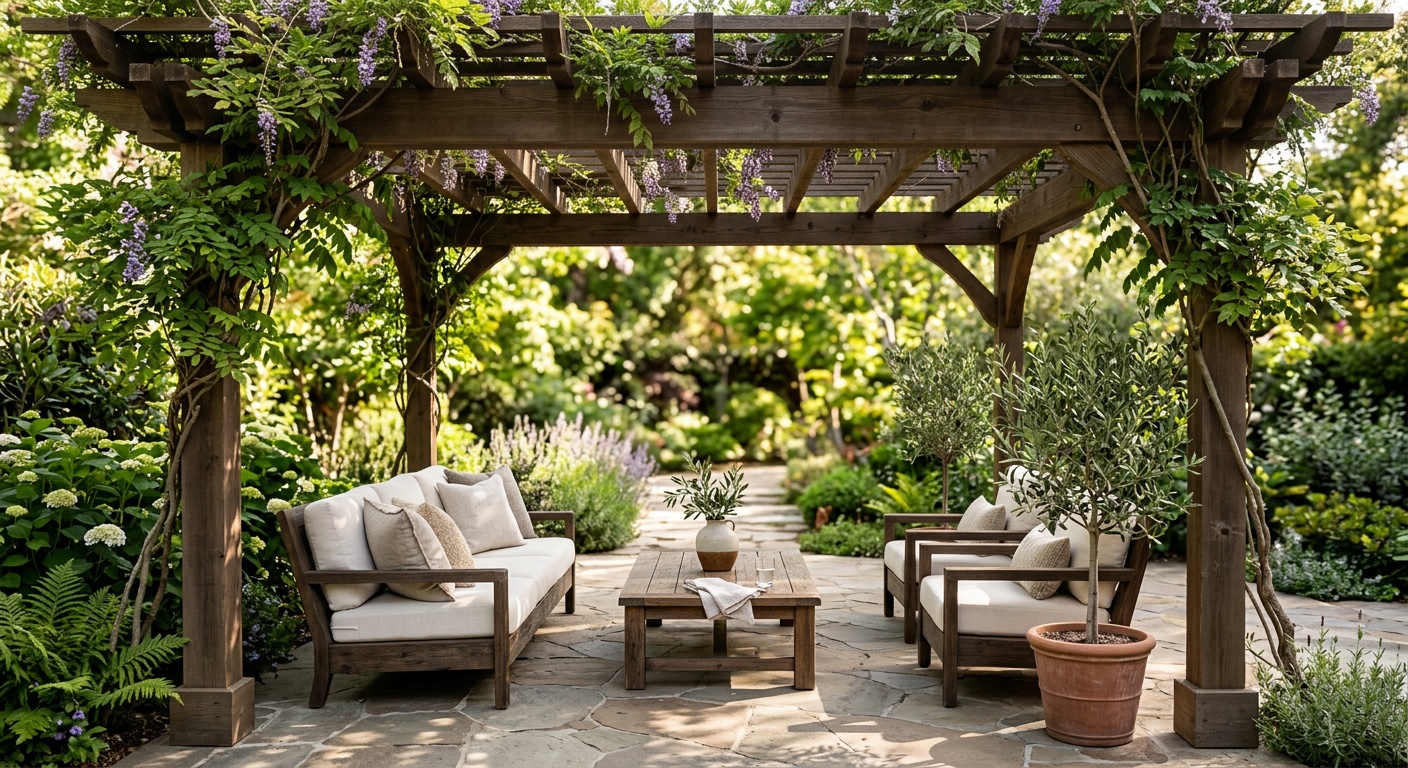
A pergola is one of the most versatile shade structures available to homeowners, offering a framework that can be tailored with climbing plants, retractable fabric panels, or polycarbonate roofing to balance shade with natural light. When positioned correctly—with the long axis running east to west—a pergola can intercept the highest, most intense midday sun while still allowing cooler morning and evening light to filter through.
Shade sails are a more modern, flexible option. A high-quality HDPE (High-Density Polyethylene) shade sail rated at 90% UV block can reduce surface temperatures beneath it by up to 30°F. Layering two overlapping sails at different heights creates even better protection while allowing hot air to escape upward—a crucial detail beginners often miss.
Case Study – The Martinez Family, Austin, TX (2025): The Martinez family retrofitted their 400-square-foot concrete patio with two overlapping 12×12 shade sails and a climbing Texas Star Hibiscus on a wooden pergola frame. Before installation, their patio thermometer hit 118°F on a 102°F ambient day. Post-installation, the same patio measured 89°F at peak sun—a 29-degree reduction. They spent approximately $1,800 total and completed the project over a single weekend.
Retractable Awnings: Flexibility Meets Efficiency
For homeowners who want control over their shade levels, motorized retractable awnings have become increasingly sophisticated. In 2026, smart awnings with integrated UV sensors and home automation compatibility are available at mid-range prices (typically $2,000–$5,000 installed). These systems automatically extend when UV intensity exceeds a threshold and retract during rain or high wind events.
The thermal benefit is real: a 2024 Department of Energy study found that properly installed retractable awnings can reduce solar heat gain on adjacent interior spaces by up to 65%, while simultaneously creating comfortable shade zones on the patio itself. This dual benefit—outdoor comfort plus reduced indoor AC load—makes them one of the strongest ROI investments in climate-adaptive home design.
Living Roofs and Green Pergola Covers
Perhaps the most beautiful and effective shade solution is the living green roof or vine-covered pergola. When fast-growing species like Wisteria, Trumpet Vine, or Grape vines are trained over a pergola structure, they create a dense, naturally insulating canopy. Unlike inert materials, living plant covers also cool the air through transpiration—releasing water vapor that actively drops ambient temperature.
The challenge? Living covers take time. Most vigorous vines require 2–3 growing seasons to provide meaningful shade coverage. Plant in early spring, train aggressively in year one, and by summer of year three you’ll have a canopy that rivals any built structure—and one that actually improves with age.
Choosing the Right Patio Materials
Your choice of patio surface material is one of the most consequential—and most overlooked—factors in outdoor heat management. Traditional dark concrete and asphalt are essentially solar collectors: they absorb heat through the day and radiate it back as infrared heat well into the evening, extending your discomfort hours beyond sunset.
Here are the materials that work with you, not against you:
- Light-colored concrete pavers: Reflect more sunlight than dark surfaces. Choose pavers with a Solar Reflectance Index (SRI) above 29 for meaningful cooling effect.
- Natural limestone and travertine: Light-toned natural stone stays significantly cooler underfoot than concrete. Travertine’s porous surface also provides natural textural grip without added synthetic coatings.
- Composite decking with cool-deck technology: Modern composite decking (brands like Trex and TimberTech) now incorporate proprietary pigment technology that reflects infrared light while maintaining rich visual color.
- Decomposed granite and gravel: Ground-level materials that stay remarkably cool, allow water infiltration (reducing heat-island effect), and integrate beautifully into naturalistic patio designs.
- Porcelain tile with light finish: Highly durable, fade-resistant, and available in light tones that reflect rather than absorb solar radiation. Particularly effective in drier climates.
Pro Tip: Whatever surface you choose, orientation matters. A patio running north-south will receive more peak sun on its long axis. Incorporate partial shading with planters or raised garden beds along the sun-facing edge to reduce direct solar exposure on the surface.
Designing for Natural Airflow
Heat is tolerable when you have a breeze. Stifling heat with no airflow is a different experience entirely. Good patio design actively channels prevailing breezes rather than blocking them—and this requires thinking about your outdoor space as a system, not just a flat surface with furniture on it.
The Venturi Effect and Patio Layout
The Venturi effect describes how air speeds up when forced through a narrower channel. You can deliberately leverage this in patio design by placing tall planters, screen panels, or garden walls strategically to funnel prevailing breezes through your seating area. Before designing, spend 30 minutes observing natural air movement across your yard in the afternoon hours—this is when cooling breezes are most likely to occur.
In practice, this might mean leaving a deliberate “wind corridor” between your pergola posts or positioning a tall hedge to block the hot western sun while leaving the cooler southern exposure open. The goal is directed airflow, not just proximity to outdoor space.
Ceiling Fans and Overhead Circulation
An outdoor-rated ceiling fan mounted within a covered pergola or patio enclosure is one of the highest-value investments you can make per dollar spent. Running at a modest 50–75 watts, an outdoor ceiling fan creates a wind-chill effect that makes 90°F feel like 80°F—a perceptible, meaningful difference in outdoor comfort.
For best results, install fans with a blade span of at least 52 inches for patios up to 400 square feet, and 60-inch spans for larger areas. Position fans to pull air upward (summer mode) to create a downdraft that pushes cooled air toward occupants. In 2026, solar-powered outdoor ceiling fans are now commercially available at accessible price points, eliminating the need for electrical runs in remote patio locations.
Water Features and Evaporative Cooling
Water is one of nature’s most efficient cooling agents. As it evaporates, it absorbs heat from the surrounding air—the same principle behind perspiration cooling your skin. Incorporating water features into your patio design isn’t just aesthetically pleasing; it’s thermodynamically effective.
Case Study – Greenfield Residence, Scottsdale, AZ (2025): A landscape architect redesigned a 600-square-foot patio around a recirculating water wall feature and an integrated misting system. Temperature loggers placed in the seating area before and after the renovation showed an average afternoon temperature drop of 18°F. The homeowner reported using the patio an additional 4–5 hours per day compared to previous summers.
Here are the most effective water-based cooling strategies for residential patios:
- Recirculating water walls: Cascading water over a stone or tile surface cools air through evaporation and creates a soothing white-noise backdrop that masks neighborhood sounds.
- Misting systems: Low-pressure misting creates a fine vapor that evaporates quickly, cooling air without significantly wetting surfaces or people. High-pressure systems (800–1,000 PSI) evaporate instantly and are virtually imperceptible on the skin while delivering serious cooling—ideal for dry climates.
- Shallow reflection pools: A flat, shallow pool alongside a seating area cools air at ground level and reflects skylight rather than heat-absorbing hardscape.
- Container water gardens: Large ceramic or composite containers filled with water and aquatic plants serve double duty—cooling ambient air and providing habitat for beneficial insects and amphibians.
For homeowners exploring supplemental indoor cooling options that work alongside outdoor solutions, the principles behind evaporative technology translate well indoors too. A range of room cooling solutions apply evaporative science at small-room scale, demonstrating how the same natural physics that cools your patio can work efficiently inside your home without traditional air conditioning.
Strategic Planting for Maximum Cooling
Plants are your most dynamic cooling tool. Through photosynthesis and transpiration, a mature tree can transpire hundreds of gallons of water per day—each gallon absorbing 2,260 kilojoules of heat energy as it evaporates. On a practical scale, a well-placed shade tree can reduce ambient temperature in its vicinity by 4–9°F.
The key is strategic placement. For a patio on the south or west side of a home (the hottest exposures in the Northern Hemisphere), deciduous trees planted within 15–20 feet of the patio edge will deliver peak shade exactly when you need it—during summer months—and then drop their leaves in autumn to allow warming winter sunlight through. This seasonal intelligence is impossible to replicate with any built structure.
Fast-growing cooling trees for 2026 planting (USDA Zones 6-9):
- Paulownia tomentosa (Royal Empress Tree): Grows up to 15 feet per year in optimal conditions; provides broad canopy shade within 2–3 seasons.
- Salix babylonica (Weeping Willow): Extremely fast grower; best suited to moist soil areas or sites near water features.
- Gleditsia triacanthos (Honeylocust): Dappled, filtered shade; drought-tolerant; excellent urban performer.
- Platanus × acerifolia (London Plane): Massive canopy spreader; excellent for large patios needing regional shade.
Combine trees with understory plantings—shade-tolerant grasses, groundcovers, and shrubs—to eliminate heat-radiating bare soil beneath them. A mulched, planted ground surface stays significantly cooler than exposed soil or hardscape.
Cooling Method Effectiveness Chart
Here’s a visual comparison of estimated temperature reduction potential for the key cooling methods discussed in this guide, based on real-world performance data:
Estimated Ambient Temperature Reduction (°F)
*Based on real-world performance ranges under peak summer conditions. Misting effectiveness is highest in low-humidity climates.
Comparative Table: Shade Structure Options
| Structure Type | Avg. Cost (USD) | Cooling Potential | Durability | Best Climate |
|---|---|---|---|---|
| Wood Pergola + Vines | $3,000–$8,000 | High (3–5 yrs) | 15–25 years | All climates |
| Shade Sail (HDPE) | $300–$1,800 | Very High (instant) | 5–12 years | Dry/sunny |
| Motorized Retractable Awning | $2,000–$6,000 | High (adjustable) | 10–20 years | All climates |
| Metal Gazebo with Fabric Roof | $1,500–$5,000 | Medium-High | 10–15 years | Low-wind areas |
| Planted Tree Canopy | $200–$800/tree | High (long-term) | Decades | Temperate |
Frequently Asked Questions
How much can natural patio cooling methods realistically reduce my outdoor temperature?
With a combination of quality shade (pergola or shade sail), a misting system, and strategic plant placement, you can realistically achieve a 15–25°F reduction in perceived ambient temperature on your patio compared to an unshaded concrete slab in direct sun. In dry climates, high-pressure misting alone can add another 10–20°F of relief. Individual results vary by climate, humidity, and design execution, but most well-designed patios in Zones 7–10 deliver a measurably comfortable outdoor experience even during peak summer heat events.
What’s the best low-budget upgrade I can make to an existing patio to reduce heat immediately?
A high-quality HDPE shade sail is the best single investment for immediate, dramatic impact at low cost. A properly installed 12×16 sail with 90% UV block can be purchased for $150–$400 and installed in a few hours using anchor posts or existing structural tie-off points. Pair it with a portable outdoor misting fan ($80–$200) and a few large white ceramic planters filled with water gardens, and you’ve created a meaningfully cooler patio environment for under $700 total. This beats any other option at this price point in terms of thermal performance per dollar.
Do misting systems work in humid climates, or only in dry regions?
This is the most common question about evaporative cooling—and the honest answer is: it depends on your humidity level. High-pressure misting systems are most dramatically effective in climates where relative humidity is consistently below 50%. In the American Southwest, the Intermountain West, and Mediterranean Europe, they’re extraordinarily powerful. In humid climates (Gulf Coast, Southeast Asia, tropical regions), where humidity regularly exceeds 70–80%, misting systems become less effective because the ambient air is already saturated with water vapor and evaporation slows dramatically. In these climates, focus your investment on structural shade, ceiling fans, and plant-based cooling rather than misting technology.
Your Cool Outdoor Living Blueprint: Next Steps
You’ve now got a complete toolkit. Here’s how to put it into action without getting overwhelmed:
- Audit your current patio’s heat profile this week. Spend 30 minutes outside during peak afternoon heat. Note which areas are hardest hit, where the prevailing breeze comes from, and what surfaces are radiating the most heat. This baseline shapes every decision that follows.
- Prioritize shade first. Before any other investment, address overhead sun exposure. A shade sail or pergola provides the foundation everything else builds on. If your budget is limited, start here and add layers over time.
- Layer your cooling systems. No single strategy delivers maximum results alone. The most effective patios combine shade (radiation block) + fans or misting (convective relief) + plants (evapotranspirative cooling) + cool materials (reduced surface radiation). Build each layer as your budget allows.
- Plant trees this autumn. Deciduous trees planted in fall establish root systems that power explosive spring growth. The best time to plant was five years ago; the second-best time is this October.
- Reassess each summer. Climate-adaptive design is iterative. Track what’s working, what isn’t, and adjust. The homeowners who enjoy the coolest patios by 2028 will be those who started refining their approach in 2026.
The broader shift happening here is significant: as urban heat intensifies and energy costs continue rising, passive outdoor cooling design is becoming not just a comfort feature but a genuine resilience strategy. Homes with well-designed, naturally-cooled outdoor spaces command premium resale values and offer measurably better quality of life during the months that increasingly feel like a thermal gauntlet.
You don’t have to accept sweltering summers as a fixed reality. Your backyard has the potential to become your coolest room in the house—and with the strategies outlined here, you have everything you need to make that happen. So what’s the first change you’re going to make this weekend?
Article reviewed by Gary Kowalski, Structural Demolition & Load-Bearing Analysis Expert, on July 15, 2026