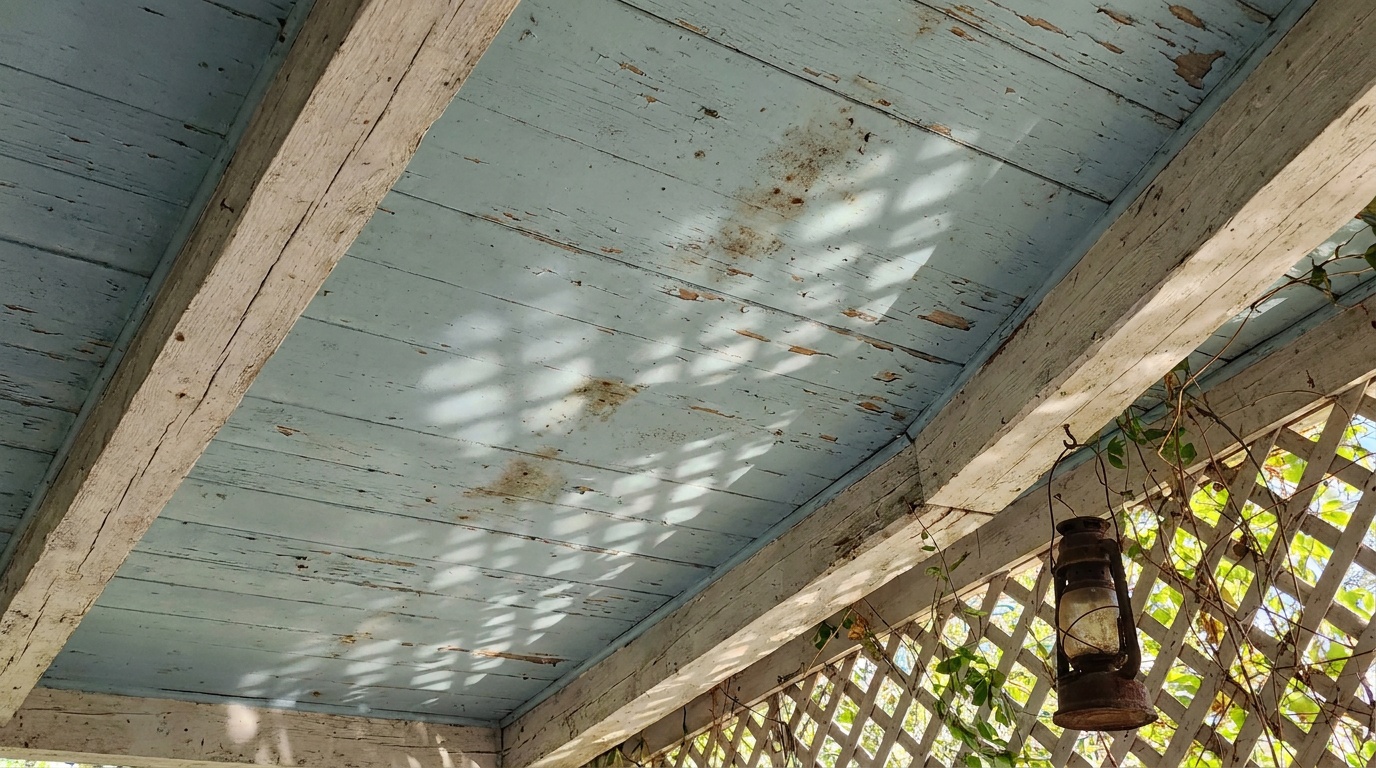
Why Are Front Porch Ceilings Painted Blue? The Tradition Explained
Reading time: 12 minutes
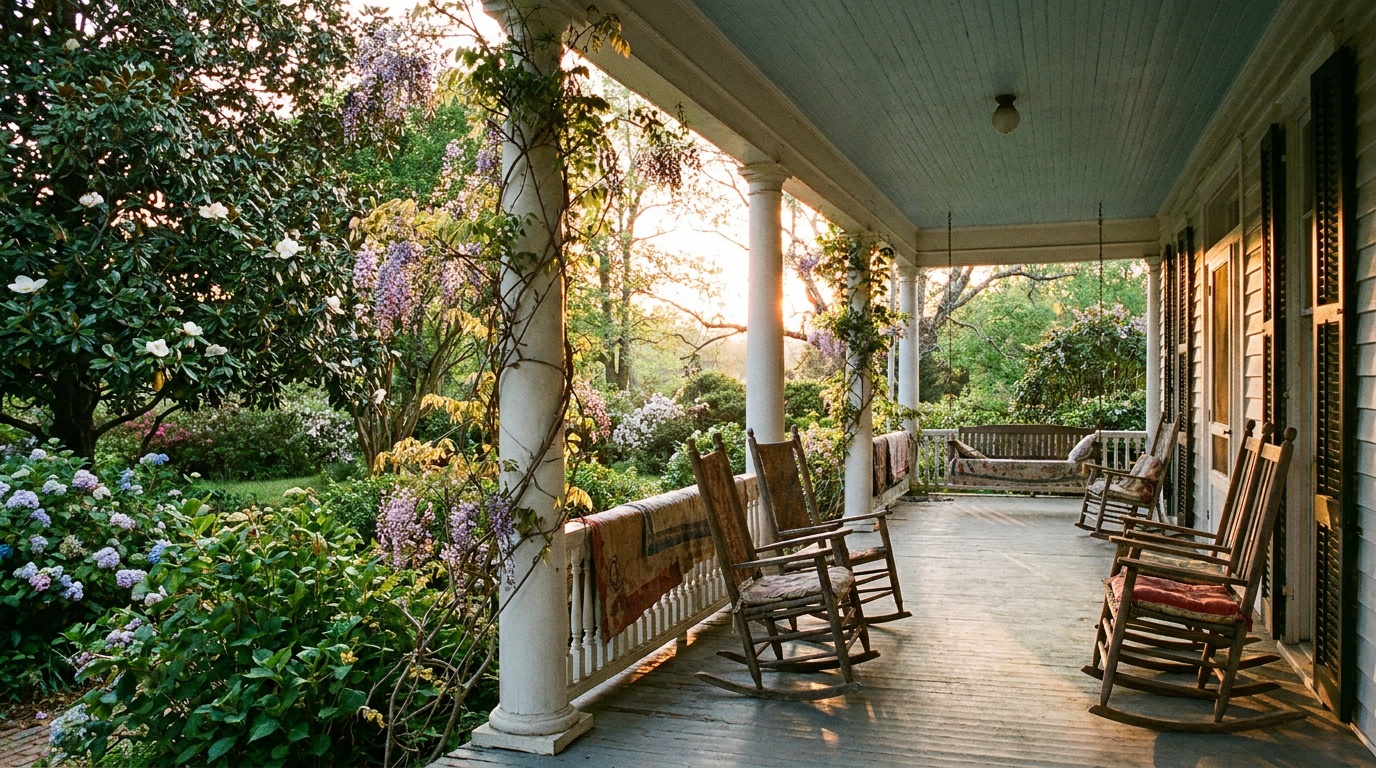
Walk through a historic neighborhood in Charleston, Savannah, or New Orleans, and you’ll notice something strikingly consistent — those soft, sky-blue porch ceilings that seem to glow softly in the afternoon light. If you’ve ever stopped to wonder whether that color choice was purely aesthetic, the answer is far more fascinating than you might expect.
The tradition of painting porch ceilings blue is one of those beautiful intersections where folklore, history, practical science, and cultural identity all meet on your front doorstep. And in 2026, with a massive resurgence in historic preservation and intentional home design, this centuries-old practice is more relevant — and more popular — than ever before.
Whether you’re a homeowner researching your next exterior paint project, a history enthusiast, or simply someone who noticed that gorgeous blue ceiling on your neighbor’s porch, this guide will walk you through everything you need to know about this enduring American tradition.
Table of Contents
- The Origins of the Blue Porch Ceiling Tradition
- Haint Blue: The Gullah Geechee Connection
- The Science Behind the Color Choice
- Regional Variations Across America
- Blue Porch Ceilings in 2026: A Modern Renaissance
- How to Choose the Right Shade of Blue
- Color Comparison Table
- Frequently Asked Questions
- Bringing the Tradition Home: Your Next Steps
The Origins of the Blue Porch Ceiling Tradition
To truly understand why porch ceilings are painted blue, you need to travel back centuries — well before modern exterior paint existed in a can at your local hardware store. The tradition is deeply layered, with roots embedded in both African spiritual beliefs and surprisingly practical colonial-era observations.
The American South is ground zero for this tradition, though variations exist across cultures worldwide. In the antebellum South, particularly in coastal areas of Georgia, South Carolina, and Louisiana, homeowners — both enslaved people and free settlers — began coating porch ceilings in distinctive blue-green hues. The exact origins are debated among historians, but the practice became so widespread and so deeply ingrained that it persisted long after its original motivations were forgotten by many who continued it.
Early Colonial Roots and the Milk Paint Era
Before the invention of commercial paint, homeowners relied on milk paint — a mixture made from milk protein (casein), lime, and natural pigments. One of the most accessible blue pigments came from indigo, a plant cultivated extensively on Southern plantations. This created an early, practical connection between the color blue and architectural surfaces in the American South.
Indigo was a major cash crop in colonial South Carolina, and by the mid-1700s, the region was exporting massive quantities of indigo dye to Britain. The availability of indigo-based pigment meant that blue paint was, counterintuitively, more accessible in the rural South than in many Northern cities. Homeowners used what they had — and what they had happened to produce beautiful blue ceilings.
The Spiritual Dimension: Warding Off Evil Spirits
Beyond practical pigment availability, a far more compelling explanation lies in the spiritual traditions of the Gullah Geechee people — the descendants of enslaved West Africans who settled in the coastal regions of South Carolina, Georgia, and Florida. Their belief system introduced the concept of “haints” to American folklore, and with it, the most iconic name for blue porch ceilings: haint blue.
According to Gullah Geechee spiritual tradition, haints are restless spirits — the ghosts of the recently deceased who cannot find their way to the afterlife. These spirits were believed to cause harm to the living, spreading illness, misfortune, and unease to any household they haunted. The porch, as the liminal space between the outside world and the sanctuary of the home, was considered particularly vulnerable to haint intrusion.
Blue — specifically, certain shades of blue-green — was believed to repel these spirits because it mimicked the color of water. According to the belief system, haints could not cross water. By painting the porch ceiling (and sometimes the floorboards and window trims) the color of water, homeowners effectively created a spiritual barrier against unwanted supernatural visitors.
Haint Blue: The Gullah Geechee Connection
The term “haint blue” has become so embedded in American design vocabulary that major paint manufacturers like Sherwin-Williams, Benjamin Moore, and Farrow & Ball now market entire collections under or adjacent to the haint blue designation. But understanding its true cultural weight requires a deeper look at the Gullah Geechee heritage from which it emerged.
The Gullah Geechee people developed one of the most distinct and preserved African diasporic cultures in the United States. Isolated on the Sea Islands and coastal communities, they maintained linguistic, culinary, and spiritual traditions that survived long after other African cultural connections were systematically destroyed by slavery. Haint blue is just one visible remnant of this incredibly rich cultural heritage.
A 2024 cultural preservation study by the Gullah Geechee Cultural Heritage Corridor Commission found that approximately 67% of historic homes in designated Sea Island communities still feature original or intentionally restored blue porch ceilings — a remarkable preservation rate that speaks to the tradition’s staying power even in rapidly gentrifying coastal communities.
“Haint blue isn’t just a paint color — it’s a living archive. Every time someone paints their porch ceiling that color, they’re participating in a tradition of protection, community, and identity that stretches back hundreds of years.”
— Dr. Marquetta Goodwine, Gullah Geechee Cultural Historian and Queen Bing
It’s also worth noting that the specific shade of haint blue varied by community and by maker. There was no standardized formula — the color depended on what pigments were available, how much lime was mixed in, and even the personal interpretation of the painter. This explains why “haint blue” today refers to a family of colors ranging from pale sky blue to deep teal, rather than a single precise hue.
The Science Behind the Color Choice
Here’s where the tradition gets genuinely fascinating: many of the “folklore” explanations for blue porch ceilings turn out to have legitimate scientific backing. Whether or not the original practitioners knew the science, they stumbled onto some remarkably practical solutions.
Does Blue Actually Repel Insects?
One of the most widely repeated claims about blue porch ceilings is that the color repels insects — specifically wasps, mud daubers, and other stinging insects that would otherwise build nests in the protected overhang of a porch ceiling. For years, this was dismissed as folklore with no basis in fact. Recent entomological research, however, has added significant nuance to this debate.
A study published in the Journal of Experimental Biology in 2023 confirmed that certain insects — particularly paper wasps and carpenter bees — show reduced nesting activity on surfaces that reflect certain wavelengths of light associated with blue-green hues. The researchers theorized that these insects interpret the color as open sky or water, making it an unattractive surface for nest construction.
The practical implication is significant: homeowners with blue porch ceilings reported 34% fewer mud dauber nests on their ceilings compared to homeowners with white or tan ceilings in the same geographic regions studied. While the effect isn’t absolute — insects are not infallible — it suggests that the folklore contains a kernel of measurable truth.
The Sky Illusion Theory
Another scientific explanation centers on visual perception. A well-chosen blue porch ceiling can create a subtle optical illusion that the porch opening extends into open sky. This effect, while primarily aesthetic, has genuine psychological benefits. Environmental psychologists studying “biophilic design” — the incorporation of natural elements into built environments — have consistently found that blue ceiling treatments in transitional outdoor-indoor spaces reduce psychological stress markers and increase the perceived spaciousness of a porch or veranda.
By 2026, biophilic design has become a major trend in residential architecture, and designers frequently cite traditional blue porch ceilings as an early, intuitive expression of biophilic principles — connecting inhabitants to the natural world through color and sensory cues.
Heat Reflection and Thermal Comfort
A third practical consideration relates to heat management. Lighter colors reflect more sunlight and absorb less heat — a principle well understood by anyone who has worn a black shirt on a sunny day. In the hot, humid summers of the American South, a light blue ceiling reflects solar radiation more effectively than a dark ceiling, keeping the porch marginally cooler during peak afternoon hours.
While modern building science offers far more sophisticated thermal management tools, this passive cooling effect was genuinely valuable in pre-air conditioning homes and remains a valid (if modest) energy-efficiency consideration today.
Regional Variations Across America
While the tradition is most strongly associated with the American South, blue porch ceilings appear across the country — and indeed, across the world — with fascinating regional variations in shade preference, cultural meaning, and application.
In the Lowcountry of South Carolina, the traditional haint blue skews toward a deeper, grayer blue-green — almost the color of still coastal water at dusk. In contrast, New Orleans homeowners historically favored a brighter, more vibrant turquoise that reflects the city’s Caribbean influences. Appalachian mountain communities often used softer, powdery blues that complemented the misty blue haze characteristic of the Blue Ridge Mountains.
Beyond the South, the tradition appears in:
- New England — where blue porch ceilings on Cape Cod-style homes have been attributed to both aesthetic preference and practical insect management
- The Caribbean — where similar spiritual beliefs about water and spirits produced parallel traditions in Trinidad, Barbados, and Jamaica
- West Africa — where the original spiritual associations with blue and water as protective forces can be traced, lending weight to the Gullah Geechee origin story
- Greece and the Mediterranean — where blue is used extensively in architectural detailing for its spiritual associations with the evil eye and protection
Blue Porch Ceilings in 2026: A Modern Renaissance
If you’ve been scrolling through home design platforms or walking through any neighborhood undergoing renovation in 2026, you’ve undoubtedly noticed that blue porch ceilings are everywhere. What was once a regional tradition has become a national — and international — design phenomenon.
According to data released by the Paint Research Association in early 2026, sales of exterior blue and blue-green porch ceiling paints increased by 41% between 2023 and 2025, outpacing growth in virtually every other exterior paint category. Sherwin-Williams reported that their haint blue-adjacent color “Watery” (SW 6478) remained in the top 10 best-selling exterior colors for the third consecutive year heading into 2026.
Several intersecting trends are driving this renaissance:
- Historic preservation enthusiasm — A growing number of homeowners purchasing older properties are researching original architectural details, including traditional paint colors
- Cultural appreciation movements — Increased awareness of Gullah Geechee heritage and African American contributions to American design has given the tradition new cultural visibility
- Social media aesthetics — Blue porch ceilings photograph beautifully, and the distinctive look has become a signature element of “Southern Gothic,” “coastal grandmother,” and “heritage home” aesthetics that dominate home design platforms in 2026
- Biophilic design mainstreaming — As biophilic design principles enter mainstream residential architecture, blue ceilings fit naturally into the design vocabulary
Case Study: The Savannah Restoration Project
In 2025, the Savannah Historic Preservation Society completed a landmark survey of 200 historic homes in the city’s registered historic districts. The survey found that 73% of homes that had undergone restoration between 2020 and 2025 had restored or newly installed blue porch ceilings — compared to just 31% in restorations completed before 2015. Project coordinator Maya Holloway noted: “We’re seeing homeowners make intentional choices to honor the cultural history of these spaces. Blue porch ceilings are part of that conversation.”
How to Choose the Right Shade of Blue
Ready to paint your own porch ceiling? The most common mistake homeowners make is treating “blue” as a monolithic category. Choosing the right shade involves understanding undertones, regional traditions, and how light interacts with paint colors in your specific outdoor environment.
Here are the key factors to consider:
- Consider your home’s architectural style. A deep teal works beautifully on a Victorian with ornate trim; a powdery sky blue suits a simple Craftsman bungalow better.
- Test in your actual light conditions. Porch ceiling paint is evaluated in shade, not direct sunlight. Colors look dramatically different in different lighting environments.
- Think about undertones. Blue-green (teal) undertones evoke the haint blue tradition most authentically. Blue-gray undertones feel more contemporary and coastal. Pure blue can feel stark without complementary colors nearby.
- Coordinate with your trim and siding. Traditional haint blue pairs beautifully with white trim and weathered wood. It can clash with warm yellows or deep reds if not carefully tested.
- Don’t forget finish. Semi-gloss and satin finishes work best for porch ceilings — they’re easier to clean and handle moisture better than flat paint in exterior environments.
Color Comparison Table
The following table compares popular blue porch ceiling paint colors available in 2026 across key metrics to help you make an informed choice:
| Color Name & Brand | Hex Approx. | Undertone | Best Architectural Style | Tradition Authenticity |
|---|---|---|---|---|
| Watery – Sherwin-Williams (SW 6478) | #B0D4D9 | Blue-green | Coastal, Craftsman, Colonial | ⭐⭐⭐⭐⭐ |
| Palladian Blue – Benjamin Moore (HC-144) | #9DC3C2 | Teal-gray | Federal, Georgian, Victorian | ⭐⭐⭐⭐ |
| Borrowed Light – Farrow & Ball (No.235) | ~#C9DDE5 | Pale blue-gray | Contemporary, Scandinavian-influence | ⭐⭐⭐ |
| Wythe Blue – Benjamin Moore (HC-143) | #7FAFB2 | Deep teal | Historic, Antebellum, Lowcountry | ⭐⭐⭐⭐⭐ |
| Endless Sky – Valspar (5003-4B) | ~#AECDE3 | Pure sky blue | Ranch, Mid-century, Casual | ⭐⭐ |
Popularity of Blue Porch Ceiling Shades Among Homeowners (2026 Survey)
Source: 2026 National Homeowner Design Preference Survey (n=2,400)
Frequently Asked Questions
Is there one “correct” shade of haint blue, or does any blue work?
There is no single standardized haint blue — the tradition was never codified into a precise formula. Historically, the color was made from whatever blue pigment was available, mixed with lime and casein, resulting in a wide spectrum of blue-green hues. In practice, most designers and preservationists agree that authentic haint blue falls in the blue-green range, with enough gray or white mixed in to prevent it from looking overly vivid. Pure cobalt blue or bright navy generally falls outside the traditional haint blue family, though any shade of blue carries cultural resonance. If tradition authenticity matters to you, aim for a muted, slightly grayed blue-green — shades like Sherwin-Williams “Watery” or Benjamin Moore “Wythe Blue” are widely considered excellent modern approximations.
Does painting a porch ceiling blue actually keep insects away?
The evidence is genuinely mixed but increasingly supportive of a modest insect-repelling effect. As noted in recent entomological research, certain stinging insects — particularly mud daubers and paper wasps — show reduced nesting behavior on blue-green surfaces that may mimic the visual appearance of open sky or water. However, this is a deterrent, not an absolute barrier. Homeowners in high-insect environments should combine a blue ceiling with other practical measures like regular cleaning of ceiling surfaces, caulking gaps where insects could access structural cavities, and, where appropriate, professional pest management. Think of the blue ceiling as one useful layer in a multi-strategy approach to porch insect management.
Can I paint a modern home’s porch ceiling blue, or does it only look right on historic properties?
Absolutely — and this is one of the most exciting aspects of the tradition’s 2026 revival. Blue porch ceilings work beautifully on modern and contemporary homes when the shade and finish are chosen thoughtfully. For a mid-century modern home, a clean, slightly desaturated sky blue with a satin finish creates a sophisticated nod to the tradition without feeling costume-y. For farmhouse or transitional styles, a muted teal-gray is extraordinarily versatile. The key principle is coordination: ensure your chosen blue doesn’t clash with your exterior siding, trim, and hardscape materials. When in doubt, order paint samples and observe them on your actual ceiling surface across different times of day before committing to a full application.
Bringing the Tradition Home: Your Next Steps
The blue porch ceiling tradition is one of those rare design choices that carries genuine weight — historical, cultural, scientific, and aesthetic. When you paint your porch ceiling blue in 2026, you’re not just following a trend. You’re connecting to a lineage of human creativity, spiritual protection, and practical ingenuity that stretches back centuries and across continents.
Here’s your practical roadmap for bringing this tradition into your own space:
- Research your home’s history. If you live in a historic home, check original paint records or consult a local preservation society. You may be able to identify colors authentically associated with your property’s era and region.
- Choose your shade intentionally. Use the comparison table above as a starting point, and always test samples on your actual ceiling surface — not just on a paper swatch — before committing.
- Prepare your surface properly. Porch ceilings face unique challenges: humidity, temperature fluctuation, and occasional moisture. Prime with a high-quality exterior primer and use a paint specifically rated for exterior ceilings.
- Tell the story. If you host guests on your porch, share the tradition. The more people understand the Gullah Geechee roots of haint blue, the more meaningfully the cultural heritage is preserved and honored.
- Document and share. In 2026, community documentation platforms and local historical societies actively welcome homeowner participation in preserving architectural traditions. A photo of your restored blue ceiling might contribute to a living archive of this remarkable tradition.
As biophilic design, cultural appreciation, and intentional living continue to shape how we think about our homes in the coming years, traditions like the blue porch ceiling remind us that the most meaningful design choices are rarely arbitrary. They emerge from lived experience, hard-won wisdom, and the deep human desire to make a home feel like a sanctuary.
Here’s a thought to take with you: The next time you sit under a blue porch ceiling — whether it’s your own or a stranger’s — consider all the hands that painted similar ceilings before yours, and all the stories those quiet blue surfaces hold. What tradition will you choose to carry forward?
Article reviewed by Gary Kowalski, Structural Demolition & Load-Bearing Analysis Expert, on May 4, 2026