Outdoor Kitchen Renovation Costs and Planning Guide 2026
Reading time: 14 minutes
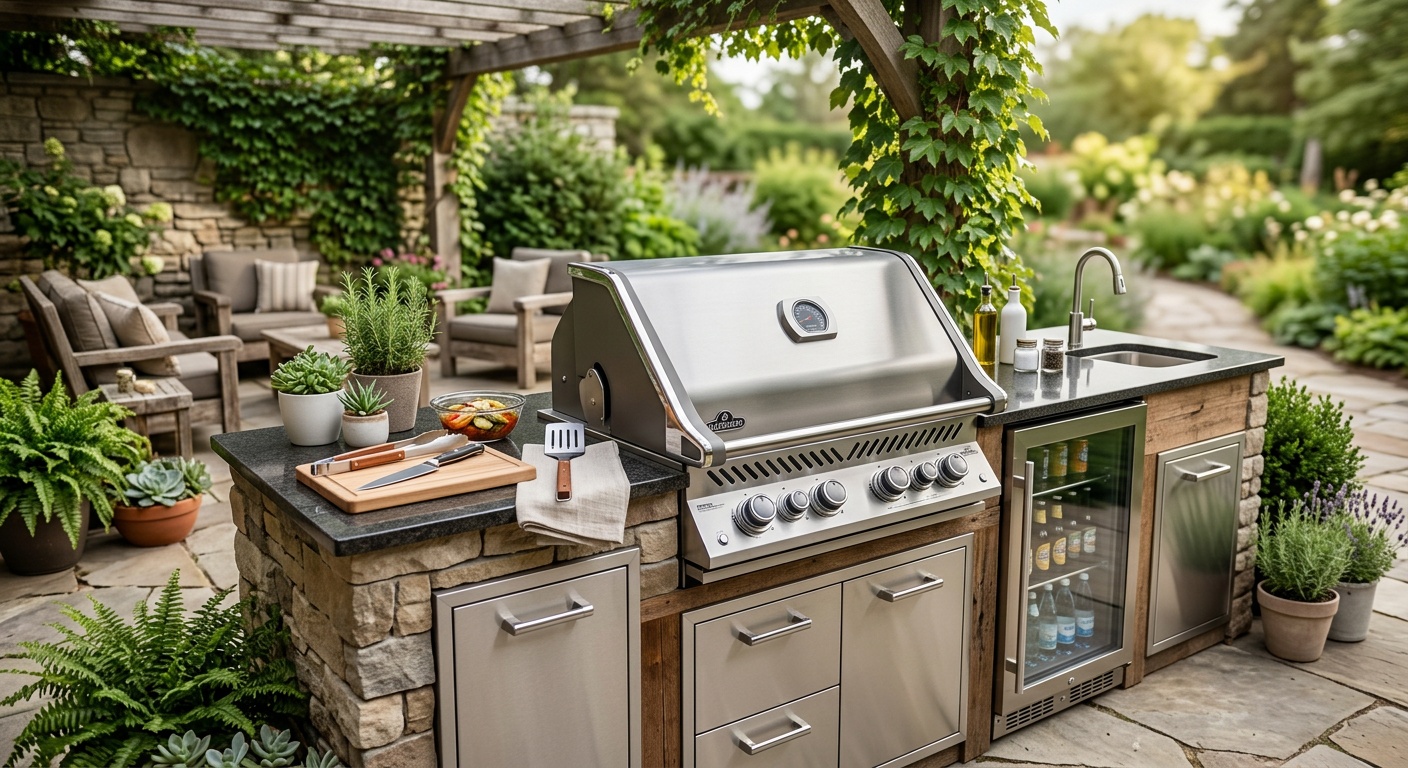
Picture this: It’s a warm Saturday evening in June 2026, and instead of crowding around a single grill while guests wait awkwardly inside, you’re hosting a seamless dinner party in a fully equipped outdoor kitchen — complete with a built-in smoker, granite countertops, and a wine fridge humming quietly beside the herb garden. Sound like a dream? For millions of homeowners across North America this year, it’s rapidly becoming reality.
Outdoor kitchen renovations have exploded in popularity since 2024, and 2026 is proving to be the most active year yet for backyard transformations. According to the National Association of Home Builders (NAHB), outdoor living space improvements now account for nearly $23 billion in annual renovation spending in the United States — with outdoor kitchens representing the single fastest-growing subcategory.
But here’s the honest truth: diving into an outdoor kitchen project without a solid plan is one of the most expensive mistakes a homeowner can make. Costs can range from a modest $8,000 to a jaw-dropping $150,000 or more, and the gap between those numbers isn’t just about luxury — it’s about planning, materials, local permits, and knowing exactly what you want before the first shovel hits the ground.
This guide is your comprehensive roadmap. Whether you’re budgeting for a starter setup or designing a culinary showpiece, we’ll walk you through real costs, smart decisions, and the questions you need to ask before you commit.
Table of Contents
- Cost Overview: What Are You Really Paying For?
- Budget Tiers Explained: Basic, Mid-Range, and Premium
- Key Factors That Drive Your Final Cost
- Choosing Materials: Durability vs. Design
- Appliances and Features: What’s Worth the Investment
- Return on Investment and Home Value Impact
- The Planning Process: How to Start Smart
- Common Challenges and How to Overcome Them
- Frequently Asked Questions
- Your Outdoor Kitchen Blueprint: Next Steps
Cost Overview: What Are You Really Paying For?
Before we dig into specific numbers, it helps to understand the fundamental cost categories in any outdoor kitchen project. Unlike an interior kitchen renovation — where you’re mostly dealing with cabinetry, appliances, and finishes — an outdoor kitchen introduces a whole layer of infrastructure that most homeowners don’t immediately consider.
In 2026, the average cost of an outdoor kitchen renovation sits between $15,000 and $45,000 for a mid-range project. High-end custom builds regularly exceed $80,000, while minimal setups using prefabricated modules can be completed for $8,000–$12,000. Here’s where your money actually goes:
- Structural foundation and framing: 15–25% of total budget
- Countertops and surfaces: 10–20% of total budget
- Appliances and grills: 20–35% of total budget
- Utilities (gas, electric, plumbing): 10–20% of total budget
- Cabinetry and storage: 10–15% of total budget
- Labor and contractor fees: 20–35% of total budget
- Permits and inspections: 2–5% of total budget
What surprises most homeowners? Utility hookups. Running a gas line from your home to a backyard kitchen 30–50 feet away can cost between $800 and $3,500 depending on your local rates and the complexity of the run. Add electrical for refrigeration, lighting, and outlets, and plumbing for a prep sink, and you’ve potentially added $5,000–$10,000 before a single countertop is installed.
Budget Tiers Explained: Basic, Mid-Range, and Premium
Tier 1: The Smart Starter ($8,000–$18,000)
This is the entry-level outdoor kitchen that still delivers serious functionality. Think of it as a permanent, weather-resistant upgrade from a standalone grill setup. A typical Tier 1 build includes a prefabricated modular frame (usually aluminum or concrete block), a built-in 3-burner gas grill, one or two base cabinets with doors, basic concrete or tile countertops, and a small prep sink.
Real-world example: A homeowner in Phoenix, Arizona completed a Tier 1 outdoor kitchen in early 2026 for approximately $14,200. The project included a 12-foot L-shaped counter configuration, a 36-inch propane grill, a single-basin drop-in sink with a cold-water-only connection, and porcelain tile countertops. She handled the design herself using a manufacturer’s online configurator and hired a local contractor to pour a concrete pad and complete the utility hookups. Total timeline: six weeks from permit application to first cookout.
The smart starter is ideal for homeowners who want to test the concept before committing to a full outdoor kitchen transformation, or for those in climates where outdoor cooking is seasonal rather than year-round.
Tier 2: The Mid-Range Masterpiece ($18,000–$55,000)
This is where most serious outdoor kitchen projects land in 2026 — and where the customization options genuinely start to excite. A mid-range build typically features a custom masonry or steel-framed structure, premium granite or quartzite countertops, a high-output built-in grill, a side burner, a refrigerator drawer or undercounter fridge, and covered overhead structure (pergola or solid roof extension).
At this price point, you’re also likely adding thoughtful design elements: integrated lighting, a TV mount, bar seating, a pizza oven or smoker attachment, and dedicated storage for cookware. These kitchens are built to function as genuine extensions of the home’s interior living space.
Real-world example: A couple in Atlanta, Georgia invested $38,500 into a mid-range outdoor kitchen in spring 2026. Their setup spans 22 linear feet, includes a 48-inch professional grill, a two-burner side station, a 24-inch under-counter wine refrigerator, a stainless steel drawer system, and a natural stone countertop. The project also included a 14×20-foot custom pergola with a ceiling fan and string lighting. Their contractor noted that the pergola alone accounted for about $11,000 of the total budget — a decision they said was “100% worth it” given Atlanta’s unpredictable summer afternoon storms.
Tier 3: The Premium Culinary Destination ($55,000–$150,000+)
At the premium level, the outdoor kitchen becomes a signature feature of the property. These builds are custom-designed, architect-specified, and contractor-executed to exacting standards. Expect full professional-grade appliance suites, natural stone or engineered quartz throughout, integrated sound systems, automatic louvered pergola roofs, outdoor dishwashers, pizza ovens, smokers, keg refrigerators, fire features, and smart home integration.
In 2026, premium outdoor kitchens have also embraced sustainability technology — solar-assisted outdoor lighting, induction cooktop integration, and greywater recycling systems for prep sink drainage are appearing in top-tier builds, particularly in California and the Pacific Northwest.
Key Factors That Drive Your Final Cost
Understanding what makes outdoor kitchen prices vary so dramatically puts you in a far stronger position when talking to contractors and suppliers. Here are the primary levers:
Geographic Location and Climate Demands
Where you live significantly affects both what you’ll build and what it costs to build it. In Florida or Southern California, outdoor kitchens are used nearly year-round, justifying larger investments in appliances, shade structures, and full plumbing. In Minnesota or New England, you may need to plan for seasonal storage of certain appliances and use frost-resistant materials throughout.
Labor costs also vary dramatically. According to HomeAdvisor’s 2026 Cost Report, the average contractor labor rate for outdoor kitchen construction ranges from $45/hour in rural Midwest markets to $110–$140/hour in major coastal metro areas like San Francisco, New York, and Seattle. This differential alone can mean a $12,000–$15,000 swing in total project cost for an identical kitchen design.
Permits and Local Code Requirements
In 2026, most municipalities require permits for outdoor kitchen construction — particularly when gas lines, electrical circuits, or plumbing is involved. Permit costs typically range from $200 to $1,500 depending on your jurisdiction. But the hidden cost isn’t the permit fee; it’s the design requirements. Some localities require outdoor gas appliances to be a minimum of 10 feet from any structure, which can dramatically affect your layout options. Others require commercial-grade ventilation hoods even for residential outdoor kitchens. Always check local codes before finalizing a design.
Pro tip: Hire a contractor who regularly works in your specific municipality. They’ll know the permit process intimately and can often prevent costly design revisions mid-project.
Structural Foundation Choices
The frame and foundation of your outdoor kitchen has a major impact on cost, longevity, and maintenance:
- Concrete block (CMU): Most durable, most labor-intensive, cost range $180–$320 per linear foot
- Steel stud framing with cement board: Faster installation, excellent durability, $120–$220 per linear foot
- Aluminum modular systems: Fastest installation, lighter weight, $80–$180 per linear foot
- Wood framing: Lowest initial cost ($60–$130 per linear foot) but requires careful weatherproofing and has shorter lifespan in wet climates
Choosing Materials: Durability vs. Design
Material selection is where many homeowners make their most consequential decisions — and their most common mistakes. The allure of a beautiful countertop can overshadow critical questions about how that material will perform through three winters, UV exposure, and grease splatter.
Countertop Material Comparison
| Material | Cost per sq ft (2026) | Durability | Maintenance | Best Climate |
|---|---|---|---|---|
| Granite | $55–$120 | Excellent | Seal annually | All climates |
| Porcelain Tile | $18–$45 | Good | Grout cleaning | Warm/dry |
| Concrete (poured) | $65–$135 | Very Good | Seal every 2–3 years | All climates |
| Quartzite | $80–$160 | Excellent | Low | All climates |
| Stainless Steel | $75–$150 | Excellent | Wipe clean | All climates |
One material gaining serious traction in 2026? Sintered stone panels (brands like Dekton and Neolith). These ultra-compact, engineered surfaces are virtually impervious to UV, heat, frost, and staining, making them genuinely ideal for outdoor applications. Expect to pay $95–$175 per square foot installed, but for homeowners in variable climates, the reduced maintenance and superior longevity often make the math work in their favor over a 10-year horizon.
Appliances and Features: What’s Worth the Investment
This is where outdoor kitchen planning gets genuinely fun — and where budget discipline matters most. The appliance market for outdoor kitchens in 2026 is more sophisticated than ever, with brands like Wolf, Lynx, Blaze, and Weber all releasing new product lines featuring smart connectivity, improved fuel efficiency, and expanded warranty coverage.
The Grill: Your Anchor Investment
The built-in grill is the functional and visual centerpiece of any outdoor kitchen. In 2026, you’ll find built-in grills across a wide spectrum:
- Entry-level built-in grills: $600–$1,800 (brands: Char-Broil, Dyna-Glo)
- Mid-range built-in grills: $1,800–$4,500 (brands: Blaze, Napoleon, Broil King)
- Premium built-in grills: $4,500–$12,000+ (brands: Wolf, Lynx, DCS by Fisher & Paykel)
The key features to look for regardless of budget: a minimum of 40,000 BTUs total output for serious cooking performance, stainless steel construction rated 304-grade or higher, and at minimum a two-year manufacturer’s warranty on all components.
The Refrigeration Question
Outdoor-rated refrigeration is non-negotiable — standard indoor refrigerators will fail quickly in outdoor temperature swings and humidity. In 2026, outdoor-rated undercounter refrigerators cost between $800 and $3,200. If you entertain frequently, this is one of the highest-impact additions for the money. Beer drawers, wine refrigerators, and combination refrigerator-freezer units are all widely available in 24-inch and 15-inch widths for seamless integration.
The Features Worth Every Penny
Based on 2026 contractor and homeowner feedback surveys, these additions consistently deliver the highest satisfaction-to-cost ratios:
- Overhead structure (pergola or covered roof): Extends usability to rainy days and hot afternoons; transforms a kitchen into a destination
- Built-in sink: Eliminates the single most inconvenient aspect of outdoor cooking — the indoor trips for washing and water access
- Task and ambient lighting: LED strip lighting under counters, pendants, and pathway lights add under $1,500 and dramatically extend evening use
- Pizza oven or kamado cooker: These specialty cooking stations have become the defining “wow factor” feature of mid-to-high-end outdoor kitchens in 2026
Return on Investment and Home Value Impact
Let’s talk about the financial reality — because an outdoor kitchen isn’t just a lifestyle purchase; it’s a real estate consideration too. According to Remodeling Magazine’s 2026 Cost vs. Value Report, outdoor kitchen additions are recovering approximately 55–72% of their cost in resale value, depending on quality of construction and regional demand.
That’s a meaningful ROI for a renovation category — especially when you factor in the qualitative value: increased home marketability, faster sale timelines, and the premium positioning that an outdoor entertaining space creates in competitive real estate markets. In Sun Belt metros like Austin, Dallas, Phoenix, and Miami, well-executed outdoor kitchens are actively cited by real estate agents as differentiating factors in multiple-offer scenarios.
Here’s a simple visual breakdown of how different features contribute to resale value recovery:
Outdoor Kitchen Feature ROI — Resale Value Recovery (2026 Estimates)
Note: ROI percentages represent estimated resale value recovery as a percentage of feature installation cost, based on 2026 national averages. Regional variation applies.
The Planning Process: How to Start Smart
The most expensive outdoor kitchen mistakes happen before construction begins — in the planning phase. Here’s a practical planning sequence that experienced outdoor kitchen designers recommend in 2026:
Step 1: Define Your Use Case First
Before you look at a single countertop sample or appliance brochure, answer these questions honestly:
- How many people do you typically cook for? (Weekend family dinners vs. parties of 30 require very different configurations.)
- What do you actually cook? A passionate griller’s needs are entirely different from someone who primarily wants a pizza oven and cocktail station.
- How many months per year will you realistically use this space?
- Are children or elderly family members regular users? (This affects counter heights, clearances, and flooring choices.)
Step 2: Assess Your Existing Infrastructure
Walk your backyard and identify: existing gas line locations, electrical panel capacity (outdoor kitchens often require a dedicated 20-amp circuit minimum, and premium setups may need 50–100 amp sub-panel additions), drainage options for the sink, and any easements or setback requirements on your property.
A licensed plumber and electrician assessment before finalizing your design costs $150–$400 and can prevent $3,000–$8,000 in redesign surprises mid-project. This is money very well spent.
Step 3: Get Three Contractor Bids
Don’t settle for one quote. In the current 2026 contractor market — still competitive but stabilizing after the post-pandemic labor shortage — three bids will give you a realistic price range and expose any outliers in either direction. When evaluating bids, ask each contractor:
- Have you completed five or more outdoor kitchen projects in this municipality?
- Can you provide references from outdoor kitchen clients specifically (not just general remodeling)?
- Is utility work (gas, electric, plumbing) included or subcontracted?
- What is your warranty on labor and installation?
Common Challenges and How to Overcome Them
Challenge 1: Scope Creep and Budget Overrun
The most universal outdoor kitchen challenge is watching a $25,000 project balloon to $38,000 through incremental additions. The pizza oven gets added. Then the pergola. Then the outdoor TV. Then the keg fridge. Each addition feels reasonable in isolation, but the cumulative effect destroys budgets.
Solution: Create a tiered “must-have, nice-to-have, dream feature” list before you sign any contract. Lock in the must-haves in the primary contract. Create a formal change order process with your contractor so that any additions require written approval with updated cost estimates. This one discipline alone can save $5,000–$15,000 on a mid-range project.
Challenge 2: Appliance Specification Errors
Ordering the wrong appliances is devastatingly expensive. In 2026, supply chains have stabilized relative to 2022–2024, but lead times for premium built-in grills and custom-sized outdoor refrigerators still run 6–14 weeks. If a contractor installs an outdoor space around an appliance that later needs to be changed, the structural work may need to be partially redone.
Solution: Lock in all appliance specifications — including exact model numbers and rough-in dimensions — before framing begins. Have your contractor confirm these measurements twice. Create a shared document with your contractor that lists every appliance with its brand, model, dimensions, power/fuel requirements, and delivery timeline.
Challenge 3: Weather and Climate Incompatibility
Homeowners in colder climates often underestimate how much their outdoor kitchen design needs to accommodate seasonal extremes. Water trapped in plumbing lines freezes and cracks. Non-UV-stabilized materials fade within two seasons. Grout in tile countertops cracks under freeze-thaw cycles.
Solution: If you’re in USDA Hardiness Zone 6 or colder, build a winterization plan into your project from day one. This includes: shutoff valves on all water lines with drain-down capability, material selections explicitly rated for freeze-thaw cycling, and covers or enclosures for appliances during the off-season. Adding these elements at the design stage costs approximately 8–12% more; retrofitting them later can cost 25–40% more.
Frequently Asked Questions
How long does an outdoor kitchen renovation typically take from start to finish in 2026?
For a standard mid-range outdoor kitchen, expect a total timeline of 8–20 weeks from initial planning to final inspection. This includes 2–4 weeks for design and planning, 4–8 weeks for permitting (timelines vary dramatically by municipality), and 2–6 weeks for active construction. Premium custom builds can take 6 months or longer, particularly when custom cabinetry, imported stone, or long-lead appliances are involved. The most common scheduling mistake in 2026 is failing to account for permit wait times — apply for permits far earlier than feels necessary.
Is it worth hiring a dedicated outdoor kitchen designer versus working directly with a contractor?
For projects over $25,000, hiring a dedicated outdoor kitchen designer or landscape architect typically delivers measurable value. Designers charge $75–$200 per hour or offer flat-fee packages ranging from $1,500–$5,000, but they routinely identify layout inefficiencies, material incompatibilities, and appliance specification issues that would cost far more to fix mid-construction. For projects under $20,000, many reputable outdoor kitchen contractors offer in-house design services, and manufacturer design tools (particularly from modular system brands) have become sophisticated enough to provide solid guidance for straightforward configurations.
What are the most important maintenance tasks to budget for after an outdoor kitchen is built?
Ongoing maintenance costs are frequently underestimated. Budget approximately $300–$800 annually for routine outdoor kitchen maintenance. Key tasks include: annual deep cleaning and re-seasoning of grill grates and burners, sealing natural stone countertops every 1–3 years ($150–$400 professionally), inspecting gas line connections annually for integrity, cleaning or replacing under-counter appliance condenser coils, and treating any stainless steel surfaces with a UV-protective polish. In colder climates, winterization service from a plumber typically costs $75–$200 per season and is essential for preventing freeze damage to sink plumbing.
Your Outdoor Kitchen Blueprint: Next Steps
The outdoor kitchen you’ve been imagining isn’t as far away as it might seem — but the distance between a dream and a disaster is measured in preparation quality. Here’s your practical roadmap to move forward confidently:
- Define your use case this week. Sit down and answer the five planning questions honestly. Write them down. Share them with anyone who’ll be using the space regularly. This single conversation shapes every decision that follows.
- Assess your infrastructure before you contact a contractor. Walk your property with a notepad. Locate your gas shutoff, assess electrical panel capacity, and identify water access points. Note any drainage limitations. This homework makes your first contractor meeting 10x more productive.
- Set a firm budget range with a 15% contingency built in. Not a wishful number — a real number you’ve reconciled with your finances. The contingency isn’t pessimism; it’s the professional standard for any construction project.
- Apply for permits early. Once you have a preliminary design, start the permit process immediately. In many jurisdictions in 2026, permit wait times of 6–10 weeks are common. This is time you can use productively to finalize appliance orders.
- Lock in your appliances before framing begins. Order them with enough lead time to arrive before the installation window. Confirm dimensions with your contractor twice.
The outdoor kitchen trend isn’t slowing down. As hybrid work patterns continue to reshape how people spend time at home, and as outdoor living increasingly becomes a primary entertaining and cooking environment for American families, well-executed outdoor kitchens will only grow in both personal value and market significance. What you build today shapes how you live for the next decade.
So here’s the question worth sitting with: If you started your outdoor kitchen planning this week, where would you actually be by next summer? The answer, for most homeowners who plan carefully and act decisively, is exactly where they’ve always wanted to be — outside, cooking something great, surrounded by people they love.
Article reviewed by Gary Kowalski, Structural Demolition & Load-Bearing Analysis Expert, on July 15, 2026