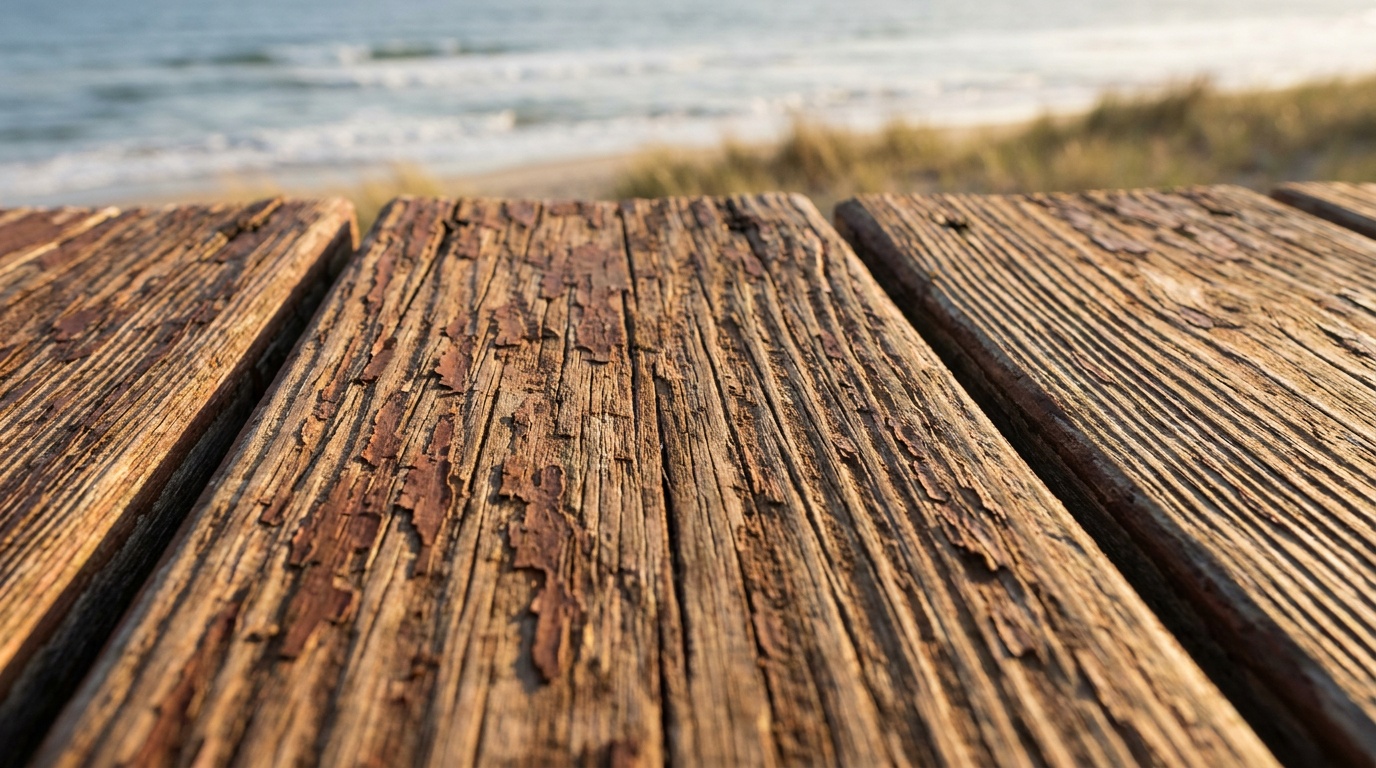
The Ideal Deck Staining Schedule for Coastal Delaware Climates
Reading time: 14 minutes
You’ve invested in a beautiful deck overlooking the Delaware Bay or the Atlantic shoreline. The salty air, the summer humidity, the nor’easters rolling in from the ocean — it’s everything coastal living promises. But here’s the thing nobody tells you when you’re sipping iced tea on that cedar planking: the same environment that makes coastal Delaware so spectacular is absolutely relentless on your deck’s finish.
Deck staining in coastal Delaware isn’t like deck staining in Kansas City. The rules are different. The timeline is compressed. The stakes — in terms of wood rot, surface degradation, and repair costs — are significantly higher. Whether you’re a new homeowner in Rehoboth Beach or a long-time resident of Lewes protecting a multi-generation family deck, understanding the ideal staining schedule for your specific climate could save you thousands of dollars and years of headaches.
Well, here’s the straight talk: most coastal Delaware homeowners are either staining too late, using the wrong products for their microclimate, or skipping critical prep steps that render even expensive stains ineffective within a single season. Let’s fix that — comprehensively.
Table of Contents
- Why Coastal Delaware Is Different from Inland Climates
- Understanding the Coastal Delaware Climate Calendar
- The Ideal Staining Windows: Month-by-Month Guidance
- How Often Should You Stain? Frequency by Wood Type and Exposure
- Choosing the Right Stain Product for Coastal Conditions
- The Prep Work That Makes or Breaks Your Stain Job
- Real-World Case Studies from Delaware’s Coast
- Stain Longevity by Product Type: A Visual Comparison
- Staining Schedule Comparison Table
- 3 Common Challenges and How to Overcome Them
- FAQs
- Your Coastal Deck Protection Roadmap
Why Coastal Delaware Is Different from Inland Climates
Coastal Delaware — spanning communities like Bethany Beach, Dewey Beach, Fenwick Island, Rehoboth Beach, and the Delaware Bay shoreline towns like Lewes and Cape Henlopen — sits in a genuinely unique meteorological zone. It’s not just “near the water.” The combination of factors at play here creates an environment that accelerates wood degradation in ways that inland homeowners simply don’t encounter at the same intensity.
The Four Coastal Stressors You’re Fighting
1. Salt Air and Airborne Chloride Deposits. Within a quarter mile of the ocean or bay, airborne salt particles settle on every exposed surface daily. According to data from the Delaware Department of Natural Resources and Environmental Control (DNREC), salt deposition rates in coastal Sussex County can be 3 to 8 times higher than rates measured just 5 miles inland. Salt is hygroscopic — it actively draws moisture into wood grain — and it accelerates the breakdown of oil-based stain binders, causing premature flaking and graying.
2. High Relative Humidity Year-Round. The Delaware coast averages 75–85% relative humidity during summer months, but even in winter, humidity rarely drops below 60%. This sustained moisture creates ideal conditions for mold, mildew, and algae growth on deck surfaces. In 2025, the National Oceanic and Atmospheric Administration (NOAA) recorded Delaware’s coastal zone as experiencing above-average precipitation for the third consecutive year, a pattern climate scientists project will continue through at least 2028.
3. UV Radiation Amplified by Water Reflection. Water surfaces reflect UV radiation, effectively doubling the UV exposure on decks near the shoreline. This accelerates the photodegradation of stain pigments and wood lignin — the biological compound that holds wood fibers together. Unstained or under-protected wood can gray and crack within a single summer season in direct sun exposure near the water.
4. Freeze-Thaw Cycling in Winter. Unlike more southerly coastal climates, Delaware experiences genuine winter freezing. When moisture-saturated wood freezes and thaws repeatedly between December and February, the expansion and contraction physically fractures stain films and opens wood grain to deeper penetration by the next season’s moisture. This cycle can compress what might be a 3-year stain lifespan in inland Pennsylvania to just 18 months on a Delaware oceanfront deck.
Understanding the Coastal Delaware Climate Calendar
Before you can build an ideal staining schedule, you need to internalize the actual rhythm of the coastal Delaware climate year. Think of it in four distinct phases, each presenting different opportunities and challenges for deck maintenance.
Season-by-Season Climate Breakdown
Spring (March–May): This is arguably the most strategically important period for coastal Delaware deck owners. Temperatures begin recovering from winter lows, typically reaching consistent daytime highs of 55–72°F by late April. Relative humidity is elevated but manageable. Rain events are frequent but shorter in duration than summer storms. Crucially, spring in coastal Delaware brings strong northwest winds that can actually dry deck surfaces faster than you might expect — a benefit for stain application timing.
Summer (June–August): Peak tourist season brings peak maintenance challenges. Humidity is oppressive, temperatures regularly hit 85–95°F, and afternoon thunderstorms are common. Staining during summer requires very careful weather window selection — you need a minimum 72-hour dry window, which is genuinely rare in July and August along the Delaware coast. The upside: if you’re staining a deck that went untreated through spring, early June still offers viable windows before the full heat of summer sets in.
Fall (September–November): The secret season that experienced Delaware contractors swear by. September and October consistently offer the best combination of dry weather, moderate temperatures (58–78°F), lower humidity, and longer drying windows. By October, the summer tourist pressure is gone, lumber yards are restocked, and local contractors have availability. This is the second-best staining season in coastal Delaware, and many professionals argue it’s actually superior to spring for new wood applications.
Winter (December–February): Deck staining is essentially off the table from late November through February. Temperatures frequently drop below the 50°F minimum threshold required for most penetrating oil stains and water-based acrylics. Frost events can trap moisture beneath newly applied stain, causing bubbling and adhesion failure. Winter is the time for planning, product research, and deck inspection — not application.
The Ideal Staining Windows: Month-by-Month Guidance
Here’s your practical month-by-month framework, calibrated specifically for coastal Delaware conditions as of 2026:
January–February: Planning Mode. Do not attempt staining. Use this time to inspect your deck for soft spots, loose boards, popped nails, and areas of previous stain failure. Order your products now to avoid the spring supply crunch that coastal Delaware hardware stores consistently experience from late March onward.
March: Conditional Window. Early March is typically too cold and wet. By mid-to-late March, watch for a stretch of three or more consecutive days with daytime highs above 55°F and no rain forecast. These windows exist but are narrow. This is a good month for cleaning and prep work, even if stain application needs to wait.
April: Primary Spring Window Opens. Mid-April through late April represents the opening of your best spring staining window. Target weeks where overnight temperatures stay above 45°F consistently. Apply stain before 10 a.m. or after 4 p.m. to avoid peak UV hours that can cause water-based stains to dry too quickly on hot wood surfaces.
May: Optimal Spring Application Month. May is the sweet spot. Weather is reliably moderate, dry stretches of 4–6 days are common, and the wood from your deck has had time to dry out from winter moisture accumulation. This is the month most experienced coastal Delaware contractors prioritize for their existing customers’ maintenance re-stains.
June (Early): Last Viable Spring Window. The first two weeks of June are still workable, though humidity begins climbing. Avoid staining after mid-June unless you’re specifically using a fast-dry formula designed for high-humidity environments.
July–August: Generally Avoid. Unless you have a covered or north-facing deck, the combination of extreme heat and humidity makes these months high-risk for application. Stain applied at 90°F+ on sun-exposed wood won’t penetrate properly — it sits on the surface and peels within months.
September–October: Optimal Fall Application Window. This is your second — and for many situations, your best — staining opportunity. Cooler temperatures allow stain to penetrate deeply without flash-drying. Lower humidity means faster, more even curing. Many professional applicators in Sussex County now schedule their fall bookings starting in January because September slots fill up by March.
November: Closing Window. Early November can work for semi-transparent stains in mild years, but watch forecasts carefully. The first hard frost typically arrives in coastal Delaware between November 10 and November 25. Any stain applied within 48 hours of a frost event risks adhesion failure.
December: Planning and Inspection. Back to maintenance planning mode. Document this season’s wear patterns to inform next year’s product and timing choices.
How Often Should You Stain? Frequency by Wood Type and Exposure
The million-dollar question — or at least the several-hundred-dollar question — is how frequently coastal Delaware decks need re-staining compared to general manufacturer recommendations, which are typically written for inland, temperate climates.
Quick Scenario: Imagine two identical pressure-treated pine decks, both built in 2023. One is in suburban Wilmington, one is on a direct oceanfront lot in Dewey Beach. The Wilmington deck, properly maintained, might go 3–4 years between re-stains. The Dewey Beach deck? Realistically, 14–18 months before you’re seeing significant film failure, graying, and open grain vulnerability. Same wood, same stain product — dramatically different maintenance cycle.
Recommended Staining Frequency by Wood Type
Pressure-Treated Pine (Most Common in Delaware): New pressure-treated pine requires a waiting period of 30–90 days before staining, as the preservatives and kiln moisture need to fully evaporate. In coastal Delaware conditions, plan for re-staining every 12–18 months with a penetrating oil semi-transparent stain, or every 18–24 months with a high-quality water-based solid color stain.
Cedar and Redwood: These naturally rot-resistant species perform better in coastal environments but still require protection. Expect to re-stain every 18–24 months with a penetrating oil formula. Cedar’s natural tannins make adhesion easier, and its density resists the moisture cycling that accelerates deterioration in softer woods.
Composite Decking: True composite decking (like Trex, TimberTech, or Fiberon) doesn’t require traditional staining, but some homeowners apply specialized composite sealers for UV protection and ease of cleaning. If your composite is showing chalking or fading — a common issue 3–5 years post-installation — manufacturers now offer approved composite refresher products that can be reapplied every 2–3 years.
Ipe and Hardwood Exotics: Increasingly popular in high-end coastal Delaware builds, ipe and similar hardwoods are incredibly dense and naturally resistant to moisture. However, their density means they don’t absorb stain the same way softer woods do. Use penetrating teak or hardwood oils rather than film-forming stains, and plan for annual application to maintain color and UV protection.
Choosing the Right Stain Product for Coastal Conditions
Not all deck stains are created equal, and the coastal Delaware environment ruthlessly exposes the difference between a premium product and a budget option. In 2026, the market offers four primary categories of deck stains, each with distinct tradeoffs for coastal applications.
Penetrating Oil-Based Stains: The traditional choice and still the top recommendation of most professional coastal contractors. These products soak into wood fibers rather than forming a surface film, meaning they don’t peel or chip — they simply fade. Brands like Armstrong Clark, Defy Extreme, and TWP (Total Wood Preservative) have proven track records in high-moisture environments. The drawback is VOC content and cleanup requirements, though low-VOC oil formulations have improved dramatically in recent years.
Water-Based Acrylic Stains: Significant improvements in acrylic chemistry have made water-based stains increasingly viable for coastal applications. They offer easier cleanup, faster dry times, and lower VOC emissions. Products like Cabot Australian Timber Oil (water-based formula) and Ready Seal Water-Based perform well in humid conditions. The critical caveat: ensure the wood surface is completely dry (below 15% moisture content) before application, or adhesion fails rapidly.
Solid Color Stains and Deck Paints: These provide maximum UV and moisture protection but behave more like paint — they form a surface film that can peel, especially on horizontal surfaces subjected to foot traffic and standing water. In coastal conditions, solid stains on decking boards (as opposed to railings and fascia) tend to fail faster than penetrating options. Reserve solid stains for vertical surfaces where peeling is less of a concern.
Semi-Transparent vs. Semi-Solid: For most coastal Delaware wood decks, a semi-transparent penetrating stain offers the best balance of protection and natural wood appearance. Semi-solids provide more pigment coverage (better UV block) with slightly better hide for weathered wood, while still allowing some wood grain visibility. As a rule, newer wood benefits from semi-transparent formulas; older or previously weathered wood responds better to semi-solid products.
The Prep Work That Makes or Breaks Your Stain Job
Here’s an uncomfortable truth that professional deck contractors in coastal Delaware will confirm without hesitation: 70% of premature stain failure is caused by inadequate surface preparation, not product quality or application technique. You can buy the most expensive stain on the market and apply it perfectly — but if the deck wasn’t properly cleaned, stripped, and dried beforehand, you’re wasting your money.
The Essential Prep Sequence for Coastal Delaware Decks
Step 1 — Remove All Furniture and Accessories. Completely clear the deck. Check under planters and furniture pads for trapped moisture, mildew, and wood rot that may have developed out of sight.
Step 2 — Inspect and Repair. Probe all boards with a screwdriver. Replace any boards where the screwdriver penetrates more than ¼ inch — that wood has rotted beyond recovery. Secure loose boards, countersink popped nails, and replace corroded hardware with stainless steel or hot-dipped galvanized fasteners (standard zinc fasteners corrode rapidly in salt air).
Step 3 — Strip Old Stain (If Applicable). If your deck has existing solid stain or film-forming finish that is peeling or failing, use a deck stripper product before cleaning. Attempting to apply new stain over failing old stain is one of the most common and costly mistakes coastal homeowners make.
Step 4 — Clean Thoroughly. Use a dedicated deck cleaner — not just a pressure washer on its own. Cleaners with sodium percarbonate (oxygen bleach) effectively kill mildew, mold, and algae that are endemic to coastal Delaware decks without damaging wood fibers. Pressure wash at 1,200–1,500 PSI maximum using a fan tip; higher pressures raise wood grain and create an uneven surface.
Step 5 — Brighten the Wood. After cleaning, apply a wood brightener (typically oxalic acid-based) to restore the natural pH of the wood and open the grain for better stain penetration. This step is frequently skipped by DIYers and even some contractors — it makes a measurable difference in final appearance and stain adhesion, particularly on weathered or previously cleaned cedar.
Step 6 — Allow Complete Drying. After all washing is complete, allow a minimum of 48–72 hours of dry weather before stain application. In coastal Delaware, use a moisture meter to verify the wood is below 15% moisture content. Rent one from any coastal Delaware tool rental shop for around $15–20/day if you don’t own one. Skipping this verification step in a humid coastal environment is a high-risk shortcut.
Real-World Case Studies from Delaware’s Coast
Case Study 1 — The Rehoboth Beach Vacation Property (2024–2026): A property management company overseeing 12 vacation rental homes in Rehoboth Beach implemented a standardized staining protocol in fall 2024 after three consecutive years of early stain failure on their decks. They switched from a big-box store water-based solid stain to Armstrong Clark semi-transparent penetrating oil applied in October 2024, following a professional cleaning and brightening cycle. As of spring 2026, 10 of the 12 decks still show no significant stain failure — a dramatic improvement over their previous 12–14 month failure timeline. The two exceptions involved decks with north-facing, heavily shaded sections where persistent moisture accumulation accelerated mildew growth beneath the stain.
Case Study 2 — The Lewes Waterfront Deck Restoration (2025): A single-family home on a Delaware Bay-facing lot in Lewes had its ipe hardwood deck professionally stripped and restored in September 2025 after the homeowner attempted a DIY stain application in July of that year. The July application — done in 88°F heat at 2 p.m. — resulted in flash-drying and surface film formation rather than proper penetration. The professional restoration required sanding with 80-grit paper to remove the failed surface coat before a proper application of Penofin hardwood oil could be completed. Total cost of the remediation: approximately $2,200 — significantly more than a proper initial application would have cost. The lesson? Timing and temperature matter as much as product selection.
Case Study 3 — Fenwick Island HOA Deck Program (2026): A coastal Fenwick Island homeowners association with 47 decks under their maintenance guidelines launched a community-wide deck assessment program in early 2026. Their findings, shared publicly at a March 2026 community meeting, revealed that decks stained in May or October consistently outperformed decks stained in any other month by an average of 7 months of additional stain life before significant deterioration. The association is now offering members a shared scheduling system to coordinate contractor visits and bulk purchasing discounts on professional-grade stain products.
Stain Longevity by Product Type in Coastal Delaware Conditions
The following chart shows estimated average stain longevity (in months) for different stain product types on a pressure-treated pine deck in direct coastal Delaware exposure conditions:
Average Stain Longevity (Months) — Coastal Delaware Conditions
*Estimates based on proper prep and application; direct oceanfront exposure; pressure-treated pine decking. Actual results vary by specific site conditions.
Staining Schedule Comparison Table
| Factor | Spring (April–May) | Early Summer (June) | Fall (Sept–Oct) | Winter (Dec–Feb) |
|---|---|---|---|---|
| Temperature Range | 55–72°F (Optimal) | 72–84°F (Marginal) | 58–78°F (Optimal) | Below 50°F (Avoid) |
| Avg. Humidity | 55–70% (Good) | 75–85% (Risky) | 50–65% (Best) | 60–75% (N/A) |
| Dry Window Availability | Moderate | Low | High | None |
| Contractor Availability | Moderate (books fast) | Low (tourist season) | Good | High (off-season) |
| Overall Recommendation | ✅ Highly Recommended | ⚠️ Use Caution | ✅ Best Overall | ❌ Do Not Stain |
3 Common Challenges and How to Overcome Them
Challenge 1: Persistent Mildew and Algae Growth
Coastal Delaware’s humidity creates the perfect breeding ground for biological growth on deck surfaces. Many homeowners notice green or black staining returning within 3–4 months of cleaning — even on freshly stained decks. The solution isn’t to stain more frequently; it’s to use a stain with built-in mildewcide chemistry (look for products containing zinc naphthenate or propiconazole in the ingredient list), and to proactively apply a diluted oxygen bleach solution annually — even in years when you’re not re-staining — to prevent biological buildup from taking hold beneath the stain film.
Challenge 2: Staining New Pressure-Treated Wood at the Right Time
New pressure-treated lumber presents a paradox: it needs protection as soon as possible, but it’s often too wet to accept stain properly straight from the lumber yard. Modern pressure-treated wood (using MCA or copper azole preservatives as of 2025 building codes) typically needs 30–60 days of outdoor weathering to reach an appropriate moisture level for staining. A simple test: sprinkle water on the surface. If it beads up, the wood is too wet. If it absorbs within 30 seconds, you’re ready to stain. Don’t be fooled by pressure-treated wood that “looks” dry — the internal moisture content can remain high for weeks even when the surface feels dry to the touch.
Challenge 3: Navigating Weather Windows During Peak Season
Summer homeowners who are only at their Delaware coastal property for weekends face a logistical challenge: they need to be present for stain application, but summer weather windows are both rare and unpredictable. The pragmatic solution here is to hire a local contractor (rather than DIYing) and giving them flexible authorization to proceed when conditions are optimal, even if that falls on a weekday when the homeowner isn’t present. Establish the prep steps yourself over a weekend, then authorize the contractor to apply once their weather monitoring indicates a proper window. Several Rehoboth Beach and Lewes area contractors in 2026 now offer this “weather-watch” service for vacation property owners — monitoring forecasts and deploying their team when optimal conditions align.
Frequently Asked Questions
Q: Can I stain my coastal Delaware deck in the fall if it was already stained in the spring of the same year?
Generally, no — and doing so would be wasteful and potentially counterproductive. If your spring stain application was done correctly with a quality product, the stain will still be performing well in fall and doesn’t need to be refreshed. The exception would be if you notice significant areas of gray, cracking, or water absorption (test with the water bead test) that indicate premature stain failure. In that case, identify the root cause — was the surface improperly prepped? Was the product unsuited to your specific exposure conditions? — before reapplying rather than simply adding more stain on top of a failing base.
Q: Is it worth paying a professional contractor versus DIYing my coastal deck stain?
For most coastal Delaware homeowners, professional application pays for itself in product longevity. A professional applicator brings commercial-grade cleaners, professional moisture meters, spray or back-brush application technique that ensures even penetration, and the experience to identify substrate issues before they cause premature failure. In 2026, professional deck staining in coastal Sussex County runs approximately $2.50–$4.50 per square foot for cleaning, prep, and application — a 400 square foot deck might cost $1,000–$1,800. Compare that to the cost of a failed DIY job that requires professional remediation (sanding, stripping, reapplication), which can run $2,500–$4,000. If you’re a confident, detail-oriented DIYer who will genuinely follow all prep steps, DIY can absolutely be successful. If you’re tempted to cut corners on drying time or cleaning steps, invest in a professional.
Q: What’s the best way to protect my railing posts and vertical surfaces differently from the decking boards?
This is an excellent and often overlooked distinction. Vertical surfaces like railing posts, balusters, and fascia boards experience far less UV radiation from direct overhead sun and less foot traffic abrasion than horizontal decking boards. This means film-forming solid stains or semi-solid formulas actually perform quite well on vertical elements — you get the color consistency and UV protection without the peeling risk that plagues horizontal solid-stain applications. Many professional coastal Delaware contractors now use a two-product approach: penetrating semi-transparent oil on decking boards for flexibility and non-peeling performance, and a quality solid or semi-solid stain on all vertical surfaces for enhanced UV block and color durability. This hybrid approach can meaningfully extend the aesthetic life of your entire deck system between maintenance cycles.
Your Coastal Deck Protection Roadmap: Seal It, Schedule It, Save It
Coastal Delaware is unforgiving to poorly maintained wood. But with the right schedule, the right products, and the right prep discipline, your deck can stand up to the salt air, the summer thunderstorms, and the winter freeze-thaw cycles for years — even decades — with dramatically reduced long-term maintenance costs.
Here are your concrete next steps, whether you’re reading this in spring, summer, or fall of 2026:
- Assess your current deck condition this week. Perform the screwdriver probe test on every board, the water bead test for moisture content, and a visual inspection for mildew or graying. Document what you find with photos to track changes over time.
- Identify your next optimal staining window. If it’s currently late spring or early fall, book a contractor or order your products now — the best windows fill up fast. If it’s midsummer, use the time to do thorough cleaning and prep so you’re ready to stain in September or October.
- Choose your product based on your specific exposure. Direct oceanfront or bay-front properties should default to premium penetrating oil semi-transparent stains. Properties two or more blocks from the water have a wider viable product range.
- Commit to annual maintenance between re-stains. Even in years when full re-staining isn’t needed, an annual oxygen bleach cleaning prevents biological growth from degrading your stain film from below.
- Plan your 2027 maintenance window now. If you stain this fall or spring, set a calendar reminder for 12–14 months out to perform a condition assessment and determine whether a touch-up or full re-stain is needed.
The broader trend is clear: climate patterns along the Delaware coast are intensifying, with more precipitation, more high-humidity days, and more severe storm events projected through the end of the decade. Decks that were on a 2-year maintenance cycle a decade ago increasingly require 14–18 month cycles today. Getting ahead of this reality — with smarter scheduling and better products — is how coastal Delaware homeowners protect both their outdoor living investment and their property value.
Your deck is more than a platform for summer gatherings. In a coastal Delaware market where outdoor living space is a genuine premium feature, a well-maintained deck is a real asset. What’s the current condition of yours — and when was the last time you truly gave it the protection it deserves?
Article reviewed by Gary Kowalski, Structural Demolition & Load-Bearing Analysis Expert, on May 4, 2026